Thursday, March 23, 2006

The Ancient Cedars of Willapa Bay

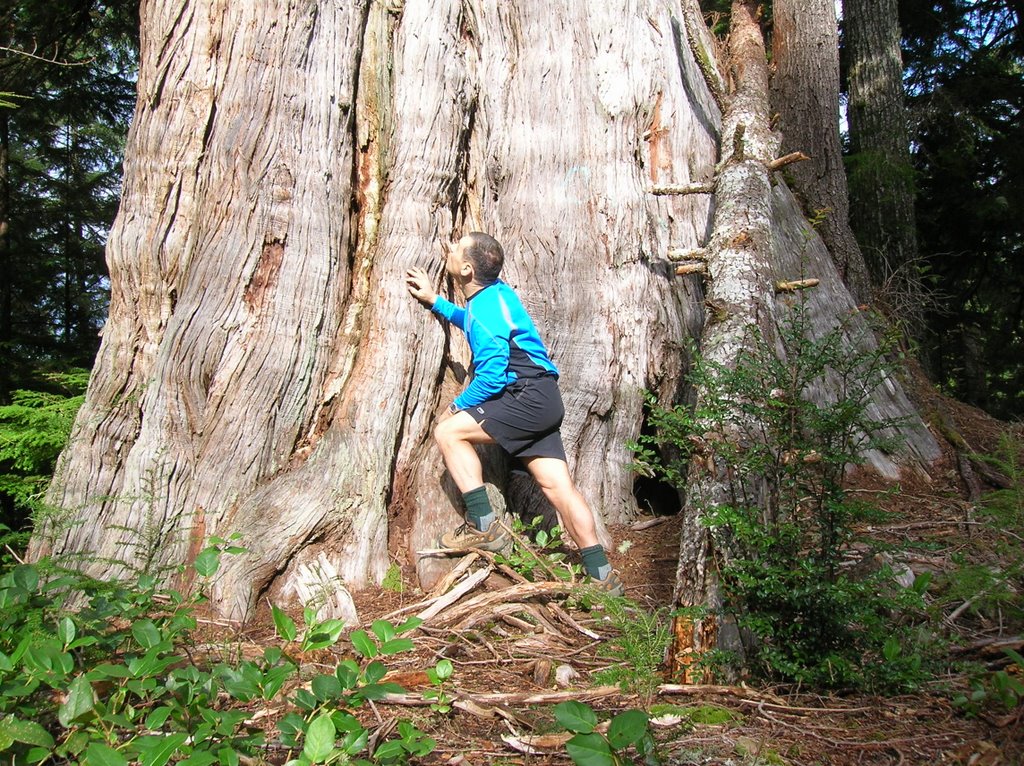
Where can you find some of the oldest and grandest cedars in Washington State outside of the Olympic and Cascade Mountains? How about Willapa Bay in the extreme southwestern corner of the state? Yes, Willapa Bay! In a sea of industrial tree farms, there are miraculously, a few remnant ancient groves among them. The cedars are found primarily on two tracts in the Willapa National Wildlife Refuge.

To view these awesome trees, you'll have to get in a kayak or boat and head to Long Island-then hoof a couple of miles. Or-you can snoop around Teal Slough to see some mega-trees like the one pictured above. Teal Slough is not too far from the refuge headquarters. But, despite their girth the trees aren't easy to find for the casual visitor. But-next year when my brand new hiking guide to the Olympic Peninsula and Southwest Washington hits the bookstores-you'll be able to find these trees on your own! The ancient cedars of Willapa Bay are just a few of the surprises that you'll find in this new book. I'll release more details about this project in the coming months.

Monday, March 13, 2006

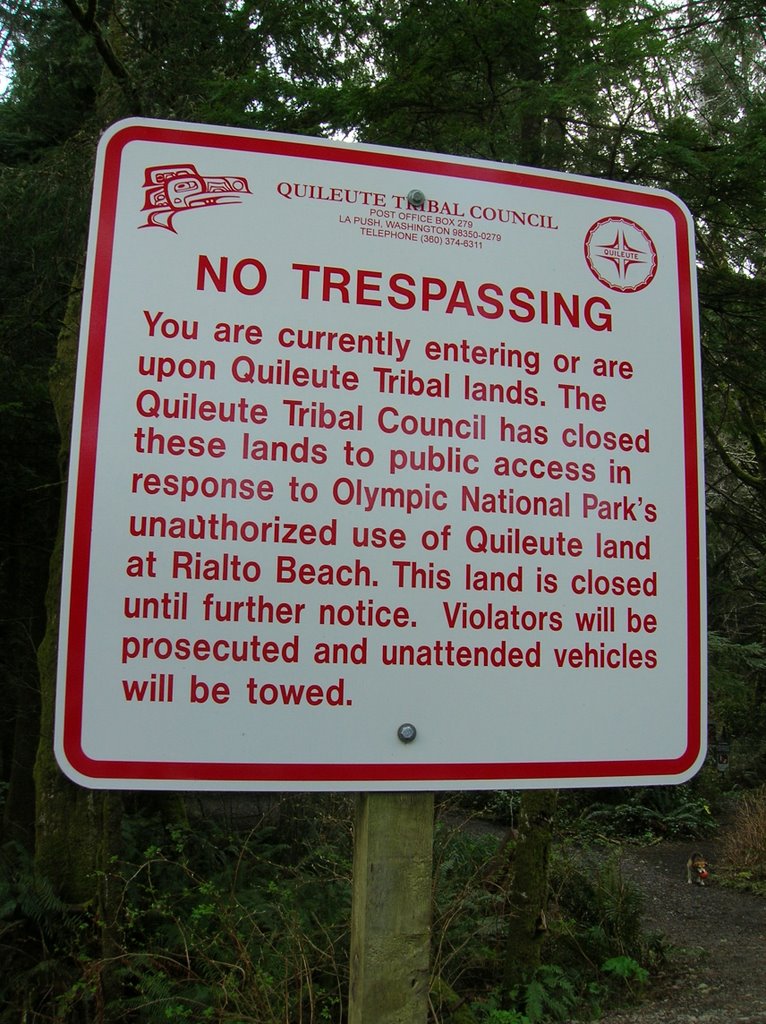
Second Thoughts on Second Beach
Regardless of whether you sympathize with the Quileute People or the National Park Service, one thing is for sure-this is bad publicity. Bad publicity for whom though? NPS or the Quileutes? My unscientific observations say that it is bad for the Quileutes. I was recently in the area and had the opportunity to snoop around. I have been told that the locals (that's the locals who don't live on the reservation) don't hold a whole lot of sympathy for the Quileutes on this move.
Yep-it's politics. And it is a tough one, too. Native rights-wilderness preservation-where do you stand? I support Native rights as I support a lot of rights-to the point where it doesn't infringe on my rights. Ok-so you close access to public lands from your private lands. You have that right. I have the right not to support your Native industries, too. I recently stayed at the Quileute Resort in La Push. Nice place. A real boon for the local economy too. A plus for helping bring a sustainable economy to the hard-pressed area. But, closing the access to Second Beach is not a good move for enticing people to come stay at your resort. And who gets hurt by this showdown with the NPS? Hikers do! Particularly young ones and old ones and ones not in the best of shape who cherish a trail like Second Beach-easy access to a wilderness beach.
The Quileutes want more land. I can understand that-I even can support enlarging their reservation-but not by chipping away the National Park Wilderness Beaches. I don't support that under any reason. Yes, it was their land at one time. But yes too, that I don't recall Native peoples running firework stands, smoke shops and casinos. Times change. America is now my ancestral land too, and public lands are part of my heritage.
Of course this isn't the first time that the NPS is involved in a scandal in these parts. The condemning of lands in the Queets Valley still rings sour with some locals. So what's to do for the Quileutes? There is plenty of available land in the region that can be given to them. They usher a concern that they would like some higher ground in case of a tsunami. The last place you want to expand then is along the coast. Look inland. NPS, extend good faith in working with the Quileutes. Quileutes, extend good faith and open the trail back up. Invite people to share your concern-don't turn them off.
When the wilderness beach was added to the National Park in the 1950's, the likes of William O Douglas certainly didn't want to protect the land at the expense of Native rights. The majority of people believe the same today. There is a workable compromise to this. If the Quileutes and the NPS can't come to an agreement-then the NPS should build a new trail from the Third Beach trailhead, which is entirely on public land. Hikers get their beach back and the Quileutes lose the public opinion battle. That would indeed be a tragedy for all.

Tuesday, March 07, 2006

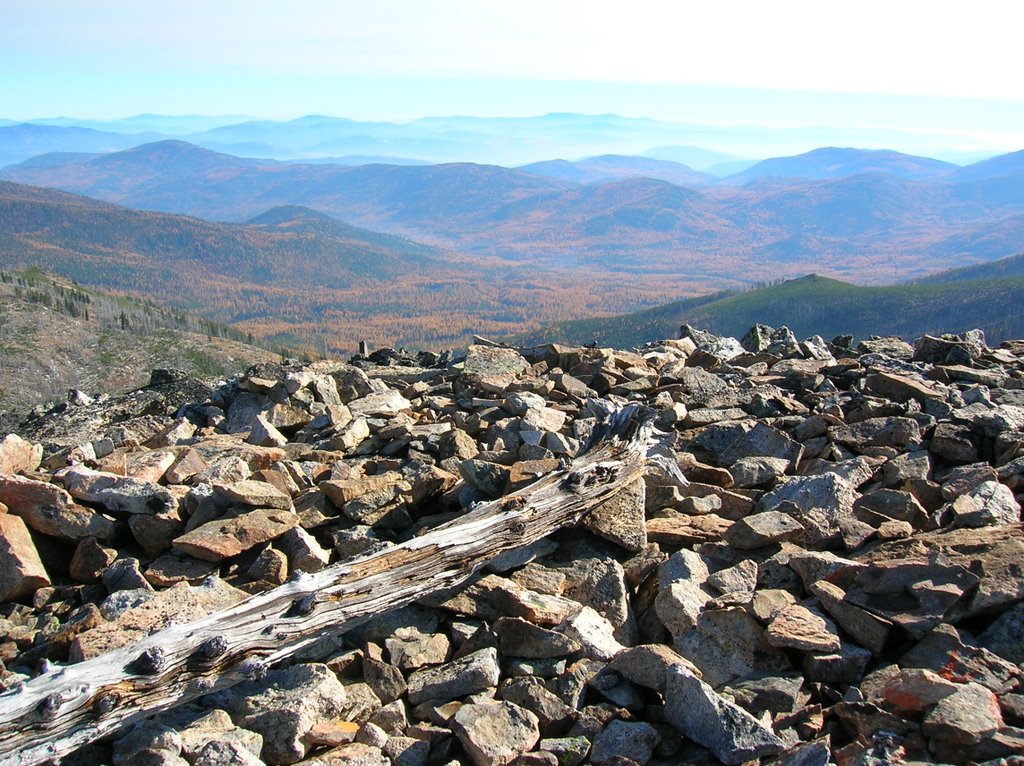
The Columbia Highlands
Exploring Washington's Last Frontier
My latest book project is moving right along. Scheduled for release in September, The Columbia Highlands: Exploring Washington's Last Frontier will help readers appreciate the beauty and value of this special corner of the Evergreen State.
Designed as both a literary journey and a practical guide for exploring this region, the book will also take readers on a visual tour of the Columbia Highlands. Complemented with the stunning photography of Bellingham's James Johnston, this book is sure to entice and inspire all who pick it up. It is also meant to get people involved in an upcoming initiative to help protect this threatened and forgotten region of Washington.
These are exciting times in the Columbia Highlands. A diverse of coalition of citizens ranging from conservationists to loggers have come together to help protect this special place. They seek wilderness designation for large tracts of roadless lands in the Selkirk and Kettle River Mountains. They seek to restore landscapes that have been mismanaged in the past. And they seek to infuse the area's economy with sustainability and vitality.
The books is being funded by a grant secured through Conservation Northwest and is being published by The Mountaineers Books.
Be sure to reserve a copy of this book. You'll enjoy the read-and enjoy all the new information that will help you start exploring this little-known but ecologically important region of the Pacific Northwest.